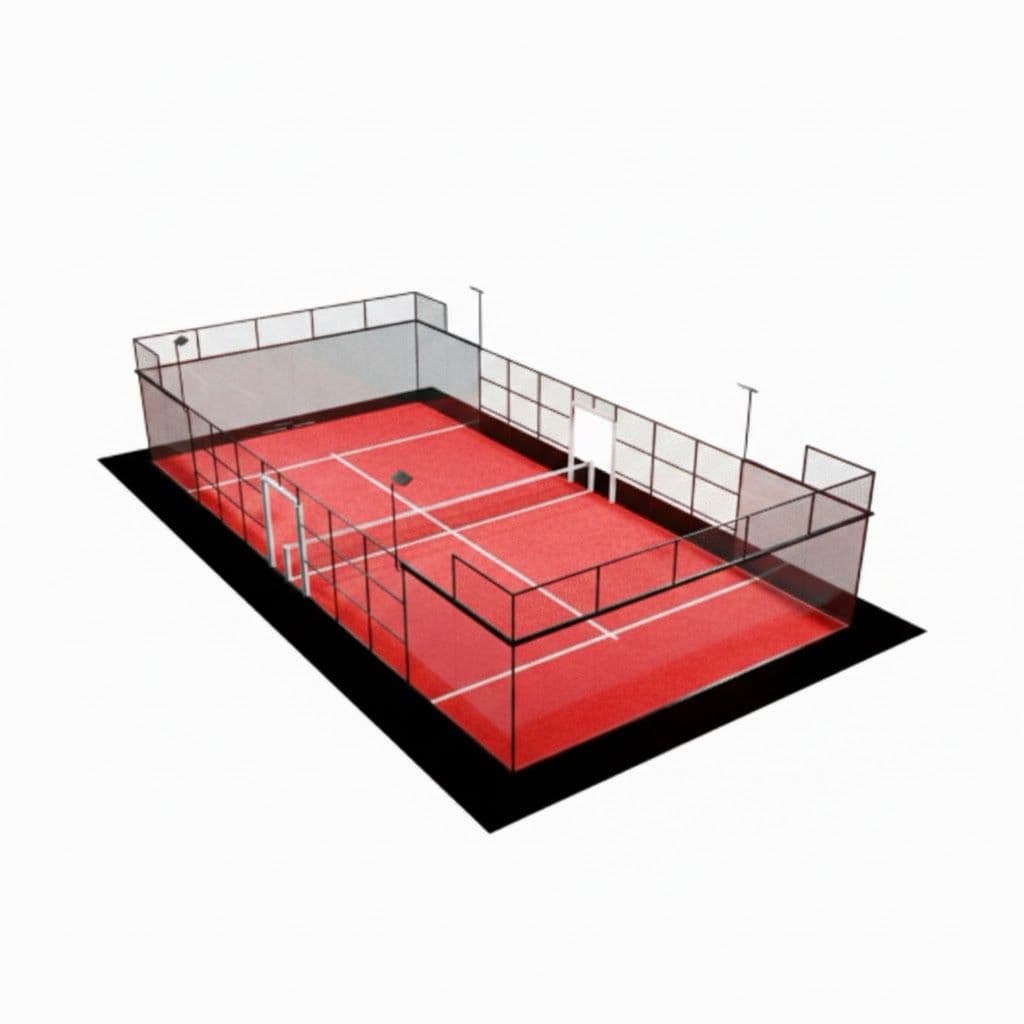
Fiche decision
How should an international padel project compare outdoor, covered and indoor formats across climate, site and building conditions without exporting assumptions from another country? The project should follow a validation hierarchy that connects the offered court, verified local inputs, appointed designers, contractual decisions and statutory authority decisions without merging their roles. A resort group is considering an exposed court, a new cover and space inside an existing venue, while supplier references come from other climates and the destination-country studies have not yet been commissioned. A cover is therefore treated as a building and interface scenario, not as a simple court option.
Write a destination-specific project basis
The project basis must identify the destination, intended use, site, existing building information, local climate sources and the assumptions that remain unverified for each format. It records the client entity, operating concept, neighbouring uses and any appointed local team. Missing appointments are shown as actions rather than filled with the overseas supplier's judgement.
Describe the exposed, covered and indoor scenarios separately, including their site, building, utility, access and operational interfaces. The comparison should not assume that the same court package creates the same project scope in every country. A common brief keeps the intended use stable while allowing each format's dependencies to remain visible.
Add a document index for the language, issuer, revision and status of every input used in the comparison. If a translation or local interpretation is still required, record that dependency and its owner. This prevents an early concept note from being treated as destination-specific design information later in the decision process.
- Destination context
- Format scenario
- Unverified assumption
Build a local climate evidence register
Local climate inputs are logged by source, location, period, status and intended technical use. Appointed professionals decide which information and methods apply to their design scope. Supplier experience in another region may help frame a question, but it does not create a project value or validate a destination-country solution.
The register separates observed conditions, design inputs and operating preferences. It also records who will review rain pathways, exposure, solar conditions, humidity or other relevant matters for the actual scenario. No historic record is converted into a promise that play, access or comfort will remain available under future conditions.
- Local source
- Design input status
- Reviewer appointed
Test site and building interfaces before preference
Every product, comfort or operational claim must be tied to the offered configuration and its evidence, while site and building conclusions must point to the appropriate local study. The supplier can identify court geometry, components and system interfaces. Local designers investigate the ground, structure, envelope, services and access within their appointments.
For an existing venue, record the documents available, their authors and their limitations. A drawing, visual visit or landlord statement does not by itself confirm the building's suitability. For an open site, the absence of a building does not remove local design, drainage, access, neighbour or approval questions. Each scenario receives its own evidence gaps.
- System evidence
- Building record
- Local investigation
Treat the cover as a coordinated project element
A proposed cover is mapped to foundations or supporting works, the court system, water management, utilities, lighting, access, installation sequence and maintenance interfaces as relevant to the design. This is an interface list, not a structural solution. The appointed team determines the design information and checks required for the destination site.
Ask which entity designs, supplies, erects, inspects and maintains each element, and how revisions are communicated between them. Commercial descriptions such as integrated or turnkey are decomposed into contractual activities. A supplier cannot convert a proposed cover into a presumed permit or take a statutory decision on behalf of an authority.
- Cover interface
- Contracting entity
- Revision path
Apply the local validation hierarchy
The validation schedule must separate supplier system information, local professional design, client and contract decisions, and statutory decisions reserved for competent authorities within their remit. For each question, it names the input, author, reviewer, decision owner and evidence needed before a dependent commitment. The word approved is used only with a named scope and actor.
A local designer retains responsibility for the design within the appointment; the supplier remains responsible for its contracted information and work. The client and contracting parties make the commercial or contractual decisions assigned to them. Competent authorities retain only their statutory decisions. None of these roles silently validates the work of all the others.
- Information owner
- Design responsibility
- Statutory decision
Issue a conditional format recommendation
The comparison summarises evidence, open studies, contractual interfaces, local decisions and operating assumptions for each scenario. It can recommend further investigation or identify a format that meets the documented threshold for the next stage. The conclusion remains tied to its country, site, configuration, date and unresolved conditions.
This guide provides no generic wind, snow, height, foundation, structural or drainage value and does not confirm building capacity, permit status, compliance or all-weather availability. Project-specific studies, design, contracts, permits, inspections and acceptance remain with appointed professionals, contracting parties and competent authorities for their respective scopes. The enquiry form can collect the destination and scenario documents.
- Evidence profile
- Open local decision
- Next-stage condition